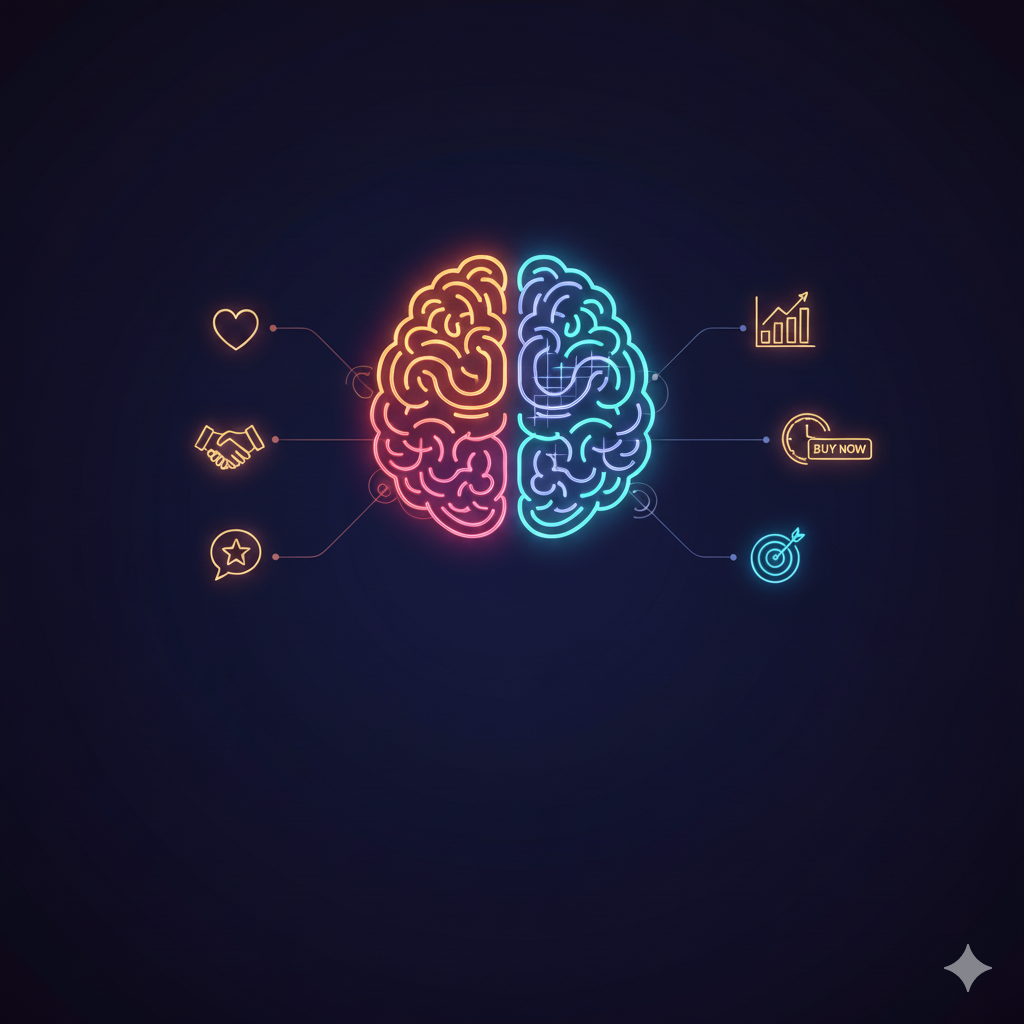
In today’s crowded digital world, every business is competing for attention – but not every brand manages to truly connect. What separates a company that merely advertises from one that builds loyal customers? The difference often lies in understanding something deeper than data and demographics: human psychology.
The best marketers do not just sell products. They craft experiences that appeal to emotion, memory, and trust – the cornerstones of decision-making. Let’s explore how marketing professionals use psychological insights to turn browsers into buyers, and how your business can do the same.
1. People Buy with Emotion, Justify with Logic
No matter how rational we think we are, most purchase decisions begin in the emotional center of the brain. Marketing pros know that people do not just buy products – they buy feelings: confidence, joy, belonging, or relief.
Think about how many campaigns focus not on the product itself, but on the feeling it represents – connection, celebration, happiness, or comfort. The message isn’t “buy this,” but rather “feel this.”
For businesses, this means thinking beyond features and prices. Ask yourself:
-
What emotion does your product or service deliver?
-
How does your brand make your audience feel?
Even in B2B marketing, emotion plays a role – because behind every business decision is still a human being making it.
Pro Tip: Test emotional appeals in your campaigns. Create two versions of the same message – one focused on emotion (e.g., relief, pride, or belonging) and one on logic (e.g., price, efficiency, or quality). Use A/B testing tools to see which version drives more engagement or conversions. Emotional resonance often outperforms rational appeal.
2. The Power of Storytelling
Humans are wired for stories. Neuroscientists have found that storytelling activates multiple areas of the brain, making messages far more memorable than facts alone. We think in pictures. Professional marketers use storytelling to build trust and connection.
Instead of listing technical specs or service details, many successful businesses share real stories about their customers, their mission, or their values. Campaigns that focus on responsibility, authenticity, or purpose often strengthen a brand’s identity and inspire loyalty.
For your business, storytelling can be as simple as:
-
Sharing a customer success story
-
Explaining the “why” behind your brand
-
Showing your team’s journey and challenges
When people can see themselves in your story, they are more likely to connect and remember your message.
Advanced Strategy: Use data to support storytelling. Track which stories perform best across channels – short testimonials on social media, long-form blogs, or behind-the-scenes videos – then double down on the formats and narratives that generate the most engagement. Storytelling is powerful, but measured storytelling is unstoppable.
3. The Role of Trust and Social Proof
Trust is the foundation of every buying decision – especially online. Studies show that over 90% of people trust recommendations from others more than traditional advertising. That’s why professional marketers rely heavily on social proof – the psychological tendency to follow others’ actions when uncertain.
This is why showcasing real customer experiences, testimonials, and ratings is so powerful. When potential clients see others having a positive experience, it reduces hesitation and builds credibility.
Businesses of all sizes can leverage social proof through:
-
Customer testimonials and reviews
-
Case studies and before-after results
-
“Trusted by” badges or client logos
-
User-generated content on social media
The goal is to show, not just tell, that others trust you – because confidence spreads faster than any campaign.
Pro Tip: A/B test different forms of social proof. Try rotating client testimonials, star ratings, or trust badges on landing pages. Measure which ones produce higher click-through or conversion rates. Sometimes, a genuine quote from a relatable customer outperforms a polished corporate review.
4. Scarcity and Urgency: The Subtle Art of Motivation
Another powerful psychological principle is scarcity – the idea that people value things more when they seem limited. “Only 2 spots left” or “Offer ends tonight” taps into our innate ‘fear of missing out’ (FOMO).
Marketers often use limited-time offers, early-bird discounts, or low-stock notifications to encourage immediate action. When used genuinely, these tactics create urgency that motivates buyers without crossing ethical lines.
For small businesses, this might look like:
-
Early registration pricing for events or courses
-
Limited-edition products or exclusive access
-
Countdown timers for seasonal promotions
When applied honestly, scarcity turns hesitation into a decision.
Advanced Strategy: Monitor urgency fatigue. Overusing scarcity language (“last chance,” “act now”) can reduce its impact. Instead, use analytics to track when and how often urgency messages actually drive action and tailor them to moments that truly warrant immediate attention.
5. Simplicity Wins: The Cognitive Ease Effect
The human brain prefers simplicity. The easier something is to understand, the more likely people are to trust and act on it – a phenomenon known as cognitive ease. That is why effective marketing keeps messages clear and visuals uncluttered.
Think about websites or ads that instantly feel effortless to navigate – they tend to earn more trust and higher engagement. Simple, well-organized layouts signal professionalism and credibility, while overly complex ones can create confusion or doubt.
For your business, clarity should always come before creativity:
-
Keep messaging short and focused
-
Use visuals that reinforce, not distract
-
Make calls-to-action visible and specific (“Get a free quote,” “Book now”)
When customers do not have to think too hard, they are more likely to act.
Pro Tip: Use analytics tools like heatmaps or scroll tracking to analyze how users interact with your site. If visitors frequently pause or drop off at certain points, your message may be too complex or visually heavy. Simplify, test, and refine.
6. Marketing Is Problem-Solving at Its Core
At its heart, great marketing is not about selling – it is about solving. People do not wake up wanting a product; they wake up wanting a solution. The businesses that truly connect are the ones that show they understand the customer’s challenge and can make it easier, faster, or better to overcome.
Every successful marketing message answers three simple psychological questions:
-
Do you understand my problem?
-
Can you solve it?
-
Can I trust you to deliver?
When a brand positions itself as a guide rather than a seller, customers feel supported instead of targeted. This shift – from promoting to helping – builds lasting relationships and drives real loyalty.
To apply this:
-
Focus your messaging on benefits, not just features
-
Use real examples of how you’ve helped customers overcome pain points
-
Make your value proposition clear: what problem do you solve better than anyone else?
Advanced Strategy: Map out the customer journey and identify “pain points” at each stage – awareness, consideration, and decision. Then create targeted content that addresses each one. Solving problems early (even before purchase) positions your business as an expert and trusted partner.
7. Putting It All Together
Marketing psychology is not about manipulation – it is about empathy. Understanding what drives people allows businesses to communicate authentically and create value that resonates.
If you want your brand to stand out, focus on these takeaways:
-
Lead with emotion, back it up with logic
-
Tell meaningful, human stories
-
Build and showcase trust
-
Use scarcity wisely to encourage action
-
Keep your message simple and friction-free
-
Solve real problems, not just advertise products
-
Test, measure, and refine – always
The most successful marketers do not just promote. They understand people and their needs. And that is what truly turns browsers into buyers.