- April 27, 2026
- Web Design Wilmington NC
- 253
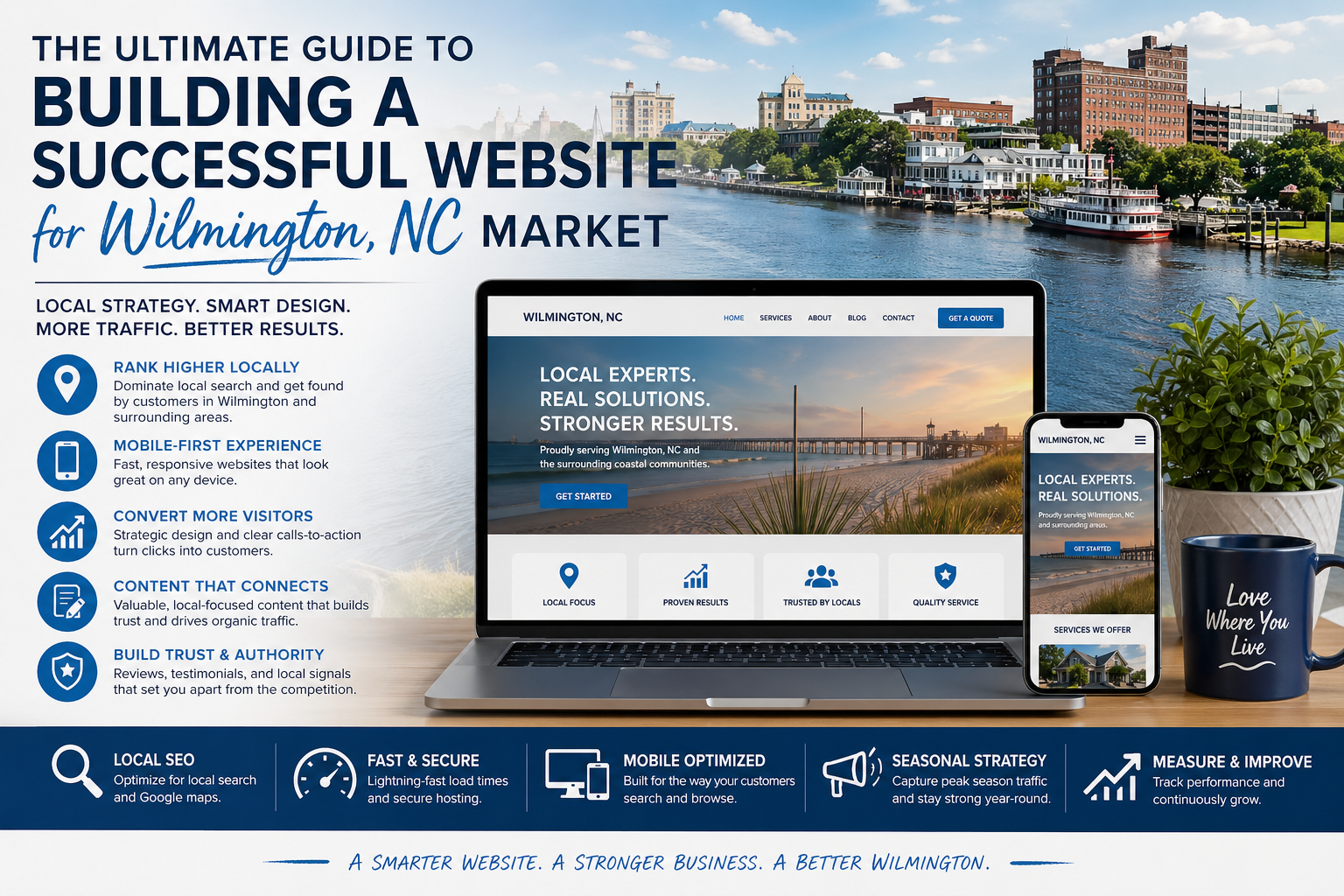
Building a successful website in Wilmington requires more than just a clean design or a modern logo. It demands a deep understanding of how people in this coastal market search, browse, and ultimately make decisions. Wilmington is not a typical city from a digital marketing perspective. It sits at the intersection of a fast-growing local population and a powerful seasonal tourism economy, which means your website has to do double duty. It needs to attract year-round local customers while also capturing the attention of visitors who may only be in town for a few days but are ready to spend immediately. This dynamic creates both an opportunity and a challenge: your website must be highly visible in local search results, fast and easy to use on mobile devices, and structured in a way that converts traffic into real business outcomes.
One of the biggest mistakes businesses make when building a website in Wilmington is skipping the strategy phase entirely. Too many companies jump straight into design, focusing on colors, images, and layout before they have clearly defined their goals. A successful website begins with clarity. You need to know exactly who you are trying to reach, whether that’s homeowners in nearby communities, tourists searching for experiences, or niche audiences looking for specialized services. Once that is defined, your entire website should be built around guiding those users toward a specific action, whether that’s making a phone call, filling out a form, or completing a booking. Without that strategic foundation, even the most visually appealing website will struggle to generate meaningful results.
The structure of your website plays a critical role in how both users and search engines interact with it. In a market like Wilmington, it is essential to build out dedicated pages for each service you offer rather than grouping everything into a single generic page. This allows you to target specific search terms and better match user intent. In addition to service pages, location-based pages are incredibly valuable. Surrounding areas such as Wrightsville Beach, Carolina Beach, Leland, and Hampstead all have their own search demand, and creating content tailored to those areas can significantly expand your reach. A well-structured website not only improves your visibility in search engines but also makes it easier for visitors to find exactly what they are looking for without frustration.
Design is often where businesses focus most of their attention, but in reality, it should serve a functional purpose rather than just an aesthetic one. A high-performing website in Wilmington must be built with a mobile-first mindset. Many users, especially tourists, are searching on their phones while on the go, which means your site must load quickly and present information clearly within seconds. Speed is not just a convenience factor; it directly impacts your rankings in search engines and your ability to retain visitors. If your site takes too long to load, users will leave before they even see what you offer. Beyond speed, your design should guide users naturally toward taking action. Clear calls to action, visible contact information, and strategically placed trust signals such as reviews and testimonials all contribute to higher conversion rates.
Local search engine optimization is arguably the most important component of a successful website in this market. If your business does not appear when someone searches for services in Wilmington, it effectively does not exist in the digital space. Local SEO involves optimizing your website content, ensuring your business information is consistent across the web, and building a strong presence through reviews and local listings. It also requires creating content that is specifically relevant to the Wilmington area. This might include blog posts about seasonal trends, local events, or common problems faced by homeowners and businesses in coastal environments. By aligning your content with what people are actually searching for, you increase your chances of ranking higher and attracting more qualified traffic.
Content itself is one of the most powerful tools you have for building a successful website. In a competitive market like Wilmington, simply having a website is not enough; you need to continuously add value through informative and engaging content. Service pages should go beyond basic descriptions and provide detailed explanations that address common questions and concerns. Blog content can help you capture additional search traffic by targeting long-tail keywords and answering specific queries. For example, a roofing company might publish articles about storm preparation or maintenance tips for coastal homes, while a hospitality business might create guides to local attractions or seasonal activities. This type of content not only improves your search rankings but also positions your business as a trusted authority in your field.
Converting visitors into customers is where many websites fall short. It is not enough to attract traffic; your site must be designed to turn that traffic into leads or sales. This involves removing friction from the user experience and making it as easy as possible for visitors to take the next step. Simple, intuitive forms, click-to-call buttons, and clear messaging all play a role in improving conversion rates. The goal is to create a seamless journey from the moment a user lands on your site to the moment they decide to contact you or make a purchase. Every element on your website should support that journey rather than distract from it.
Technical performance is another critical factor that cannot be overlooked. Search engines evaluate websites based on a variety of technical criteria, including load speed, mobile usability, and overall structure. A well-optimized site will not only rank higher but also provide a better experience for users. This includes optimizing images, using reliable hosting, implementing secure connections, and ensuring your site is free of errors. While these details may not be visible to the average visitor, they have a significant impact on how your website performs both in search results and in user engagement.
Seasonality is a unique aspect of the Wilmington market that should influence your website strategy. Businesses in this area often experience fluctuations in demand based on the time of year, with peak activity during the spring and summer months. To take full advantage of this, your website content and marketing efforts should be planned in advance. Publishing relevant content before peak season allows search engines time to index and rank your pages, positioning you to capture increased traffic when demand is highest. During the off-season, your focus can shift toward maintaining visibility and targeting local customers who require ongoing services.
While organic search traffic is essential for long-term growth, combining it with paid advertising can accelerate your results. Search engine optimization builds a strong foundation over time, but paid ads can generate immediate visibility and leads. When used together, these strategies create a powerful growth engine that allows you to capture both short-term and long-term opportunities. This is particularly valuable in a competitive market like Wilmington, where standing out quickly can make a significant difference in your overall success.
Branding also plays an important role in how your website is perceived. In a coastal city like Wilmington, businesses that incorporate local elements into their branding often resonate more strongly with their audience. This might include using imagery that reflects the beach lifestyle, highlighting connections to the community, or showcasing real experiences rather than generic stock visuals. Authenticity is key, as users are more likely to trust and engage with businesses that feel genuine and locally connected.
Finally, it is important to understand that a successful website is never truly finished. Continuous improvement is essential for staying competitive and adapting to changes in user behavior and search engine algorithms. By regularly analyzing your website’s performance, you can identify areas for improvement and make data-driven decisions that enhance your results over time. This might involve updating content, refining your design, or experimenting with new features that improve user experience.
In the end, building a successful website in Wilmington comes down to creating a strategic, user-focused platform that aligns with the needs of your audience and the realities of the local market. It is not about following trends or copying competitors, but about understanding what drives results and consistently executing on those principles. Businesses that take the time to build their websites the right way position themselves for sustained growth, stronger visibility, and a steady stream of new opportunities in one of North Carolina’s most dynamic markets.